
The cement industry accounts for roughly 7–8% of global CO₂ emissions, making it one of the most challenging—and critical—sectors to decarbonize. Unlike power generation, cement emissions arise not only from fuel combustion but also from process emissions during limestone calcination, which are unavoidable without carbon capture.
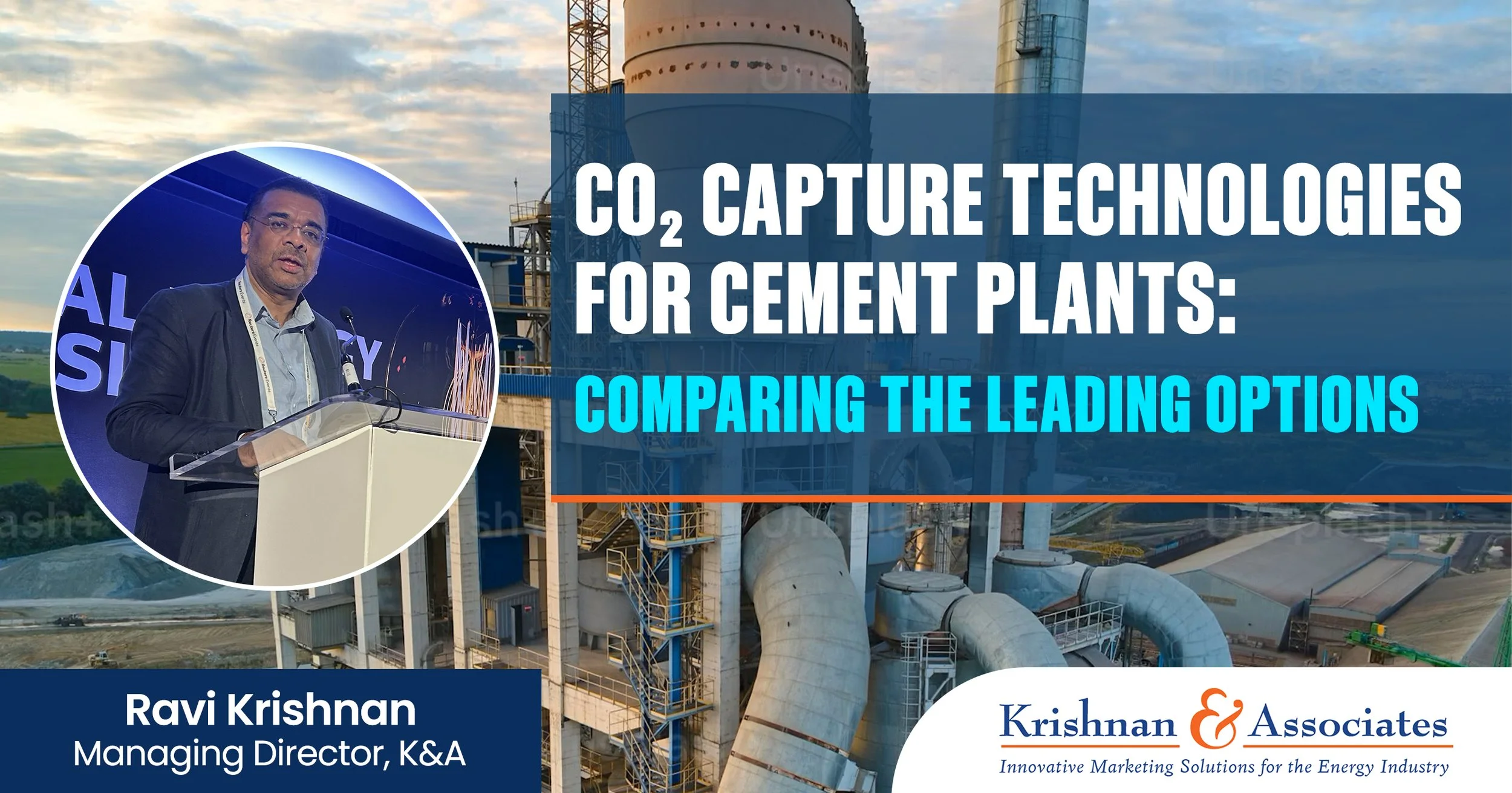
Carbon Capture, Utilization, and Storage (CCUS) therefore plays a central role in any credible cement decarbonization roadmap. However, no single CO₂ capture technology is universally “best.” Each option presents trade-offs in efficiency, energy use, cost, integration complexity, and long-term scalability.
This article reviews the six most relevant CO₂ capture technologies for cement plants, highlighting where each makes sense—and where it doesn’t.
1. Liquid Solvents (Amine Scrubbing): The Proven Workhorse
Technology maturity: High (TRL 8–9) CO₂ removal efficiency: ~85–95%
Amine-based solvent systems remain the most mature and widely deployed CO₂ capture technology across heavy industry. In cement plants, amine scrubbing is typically applied as a post-combustion retrofit, capturing CO₂ from kiln or preheater exhaust gases.
Strengths
Proven at industrial scale
High CO₂ capture efficiency and purity
Well understood by regulators and financiers
Compatible with existing cement plants
Challenges
High energy penalty for solvent regeneration
Significant steam and electricity demand
Solvent degradation, corrosion, and makeup costs
Moderate water consumption
Best fit: Large cement plants seeking near-term deployment using bankable, low-risk technology—particularly where waste heat or low-carbon steam is available.
2. Membrane Processes: Modular and Energy-Efficient
Technology maturity: Emerging (TRL 4–6) CO₂ removal efficiency: ~70–90%
Membrane separation relies on selective permeability to separate CO₂ from flue gas. While still emerging, membranes are gaining attention due to their low energy consumption and modular design.
Strengths
Low energy penalty compared to solvents
High operational flexibility
Modular and scalable
Low water and chemical usage
Challenges
Requires relatively clean, dry gas streams
Membrane fouling and durability concerns
Lower capture efficiency compared to solvents
Limited commercial deployment in cement
Best fit: Small-to-medium cement plants, hybrid systems, or applications where partial CO₂ capture is acceptable and flue gas quality can be controlled.
3. Calcium Looping: A Natural Fit for Cement Chemistry
Technology maturity: Developing (TRL 5–7) CO₂ removal efficiency: ~85–95%
Calcium looping is particularly attractive for cement plants because it uses lime-based sorbents, closely aligned with cement raw materials. CO₂ is captured by reacting with calcium oxide and released during regeneration.
Strengths
High capture efficiency
Uses low-cost, widely available materials
Strong synergy with cement kilns
Potential integration with clinker production
Challenges
High energy demand for sorbent regeneration
Large solid material handling requirements
Significant plant modifications required
Sorbent deactivation over multiple cycles
Best fit: Large, new-build or heavily modified cement plants, especially those pursuing deep decarbonization with integrated process redesign.
4. Oxy-Combustion: High Purity CO₂ by Design
Technology maturity: High (TRL 8–9) CO₂ removal efficiency: ~90–98%
Oxy-combustion replaces air with nearly pure oxygen, producing a flue gas composed primarily of CO₂ and water vapor. This simplifies downstream CO₂ purification but fundamentally alters kiln operation.
Strengths
Very high CO₂ capture efficiency and purity
Lower downstream separation requirements
Favorable for CO₂ transport and storage
Strong regulatory acceptance
Challenges
Extremely high capital and system complexity
Requires an air separation unit (ASU)
Significant operational changes to the kiln
High auxiliary electricity demand
Best fit: Large-scale cement plants with long investment horizons, especially where high-purity CO₂ is required for utilization or storage.
5. Cryogenic Separation: Ultra-High Purity, High Cost
Technology maturity: Developing (TRL 5–7) CO₂ removal efficiency: ~90–99%
Cryogenic systems separate CO₂ by cooling flue gas to very low temperatures, condensing CO₂ into a liquid or solid phase.
Strengths
Extremely high CO₂ purity
No chemical solvents required
Very low water usage
Suitable for specialty applications
Challenges
Very high energy consumption
Expensive refrigeration infrastructure
Limited scalability for cement flue gas volumes
Typically unsuitable for variable operations
Best fit: Niche applications where ultra-high purity CO₂ is required and energy costs are secondary.
6. Solid Sorbents: Flexible and Promising
Technology maturity: Emerging (TRL 5–7) CO₂ removal efficiency: ~70–90%
Solid sorbent systems use materials such as metal-organic frameworks (MOFs), activated carbons, or advanced minerals to adsorb CO₂.
Strengths
Lower regeneration energy than liquid solvents
High operational flexibility
Low water usage
Modular and adaptable designs
Challenges
Sorbent degradation and lifecycle uncertainty
Still limited commercial experience
Regeneration energy remains significant
Performance varies widely by material
Best fit: Pilot projects, hybrid capture systems, or cement plants exploring next-generation technologies with long-term innovation potential.
Choosing the Right CO₂ Capture Path for Cement Plants
There is no one-size-fits-all solution. Technology selection depends on:
Plant size and age
Willingness to retrofit vs. redesign
Access to low-carbon energy and waste heat
Desired CO₂ purity and end use
Capital availability and regulatory environment
General guidance:
Near-term deployment: Amine scrubbing
Process-integrated future plants: Calcium looping or oxy-combustion
Energy-efficient modular solutions: Membranes or solid sorbents
Specialty CO₂ markets: Cryogenic separation
Final Thoughts
Carbon capture is no longer optional for cement producers—it is foundational to long-term competitiveness in a carbon-constrained world. The industry’s challenge is not whether to adopt CCUS, but which technologies to deploy, when, and at what scale.
As innovation accelerates and carbon pricing tightens, cement producers that begin piloting and integrating capture technologies today will be best positioned to thrive tomorrow.