
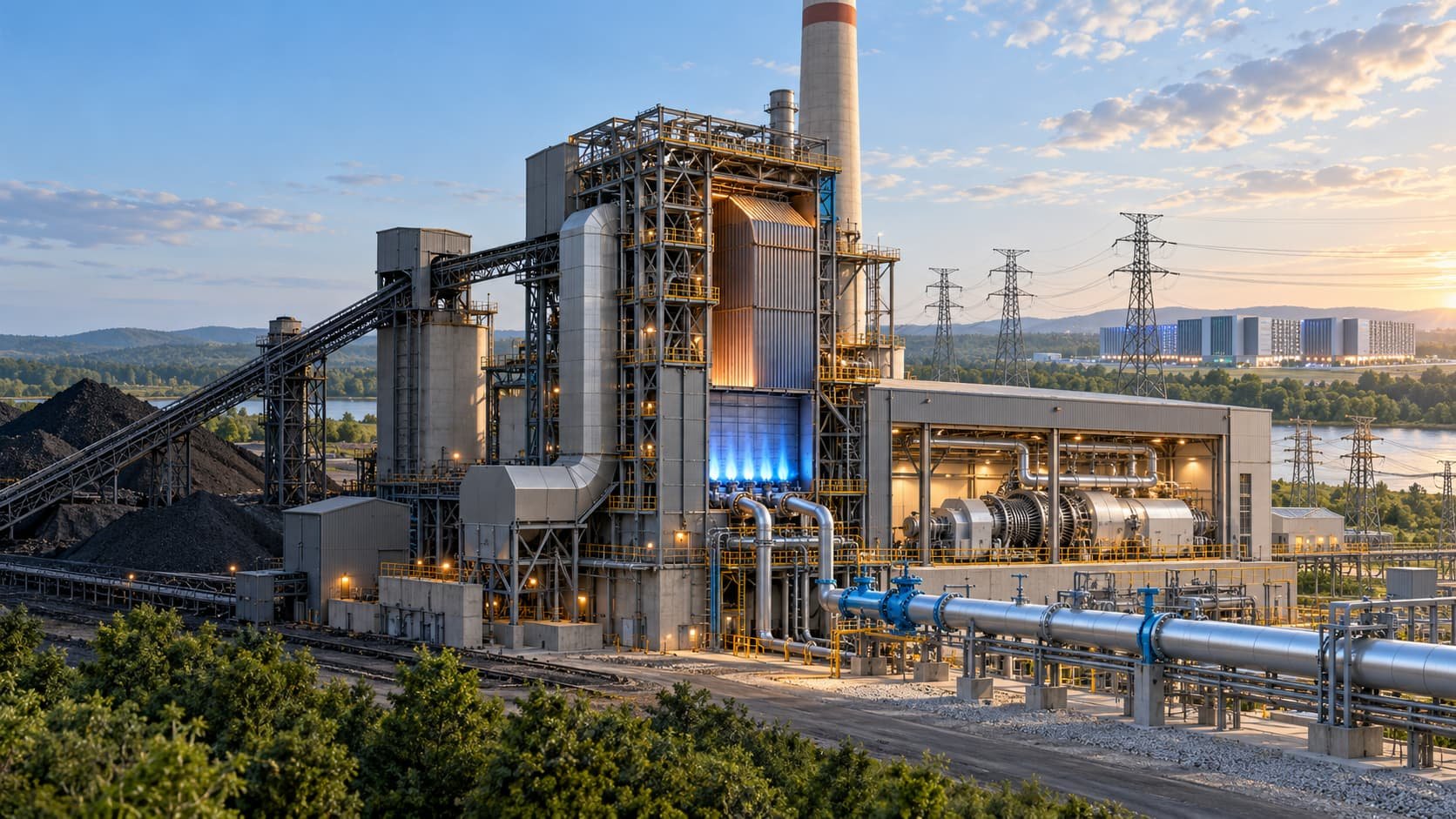
Electricity demand is rising in many regions as data centers, manufacturing, and electrification add pressure to the grid. At the same time, developing new generation can take years, and many power systems still depend on existing plants for dependable capacity. These conditions have renewed interest in coal-to-gas conversion: modifying an existing coal-fired boiler to burn natural gas while retaining much of the plant’s steam-generation equipment.
Coal-to-gas conversion is different from replacing a coal plant with a gas turbine and heat-recovery steam generator. A conversion keeps the existing boiler and steam turbine as the core of the generating unit, while changing the combustion system and making the modifications needed to operate on natural gas. Depending on the plant, the work may include new gas burners, fuel piping and valves, changes to air and combustion systems, controls upgrades, and modifications to support safe operation and maintenance.
Why consider conversion?
One reason is the potential to make use of infrastructure that is already in place. The site may have an operating workforce, transmission connections, water systems, electrical equipment, and other plant assets. Reusing suitable equipment can preserve generation at an established location and may provide an alternative to immediate retirement or a complete plant replacement.
Conversion can also change a unit’s emissions profile. Burning natural gas generally avoids coal-related ash and produces far lower sulfur dioxide and mercury emissions. Direct carbon dioxide emissions are also generally lower than when burning coal, although the result for each unit depends on its design and operating efficiency. Nitrogen oxide emissions require careful attention to burner design and combustion controls. Natural gas is still a fossil fuel, and its climate impact also depends on factors such as methane leakage across the supply chain.
For plant owners, conversion may offer a way to continue operating an existing steam-cycle unit while responding to changing fuel, regulatory, and reliability needs. It may also provide more flexibility in how the plant is operated, depending on the boiler, controls, gas supply, and grid requirements.
Demand is only one part of the case
Growing electricity demand can make existing generation more valuable, but it does not automatically make a conversion viable. Each unit must be assessed on its own condition and role in the power system.
The cost and availability of natural gas are central considerations. A plant needs access to a dependable gas supply, and the surrounding pipeline system must have enough capacity when the unit is expected to run. The owner also needs to evaluate gas transportation, supply arrangements, and possible competition for pipeline capacity during periods of peak demand.
The boiler and steam turbine require equally careful review. Their age, condition, operating history, maintenance needs, and expected remaining life all affect whether conversion makes sense. A unit with major repair needs or limited future operating prospects may not justify extensive modifications. A plant with a continuing role in reliability or local generation may present a stronger case.
Owners should also compare conversion with other options, including continued coal operation, retirement, replacement generation, or a strategy that preserves fuel flexibility. The right choice depends on plant-specific economics, market conditions, infrastructure, emissions requirements, and the owner’s long-term plans.
Engineering determines whether the promise holds
A coal boiler cannot be treated as a generic vessel that can simply accept a different burner. Coal and natural gas burn differently, and a conversion changes how heat is released and absorbed inside the boiler. Engineers need to understand the existing furnace, heat-transfer surfaces, air systems, draft equipment, controls, and steam conditions before finalizing a design.
Performance analysis should examine whether the converted unit can meet its operating requirements across the expected range of loads and conditions. Emissions, steam temperature, pressure, output, heat rate, and other performance measures may be part of the acceptance criteria. The design needs to account for the plant’s operating data and physical condition, and its predictions should be supported by appropriate modeling and engineering review.
Planning for commissioning and ongoing operation is also essential. Plant staff need clear procedures, updated controls, training, and a plan for resolving issues discovered during startup. The conversion’s success depends not only on the equipment installed, but also on whether the completed system performs reliably under real operating conditions.
A selective option, not a universal answer
Coal-to-gas conversion can offer a practical way to extend the use of selected power-generation assets. It may help owners respond to demand, retain valuable infrastructure, and reduce certain emissions while avoiding a complete replacement of the steam-cycle plant.
But the opportunity is selective. Gas access, boiler condition, remaining plant life, operating economics, permitting, performance requirements, and the project team’s ability to deliver all matter. A disciplined feasibility assessment should establish whether the unit is a sound candidate, define the necessary scope, and compare conversion with realistic alternatives.
For the right plant, conversion can be part of a measured transition: adapting existing generation to new operating conditions while preserving useful assets. The strongest projects will begin with a clear understanding of the unit, the fuel supply, the grid’s needs, and the performance the converted plant must deliver.