
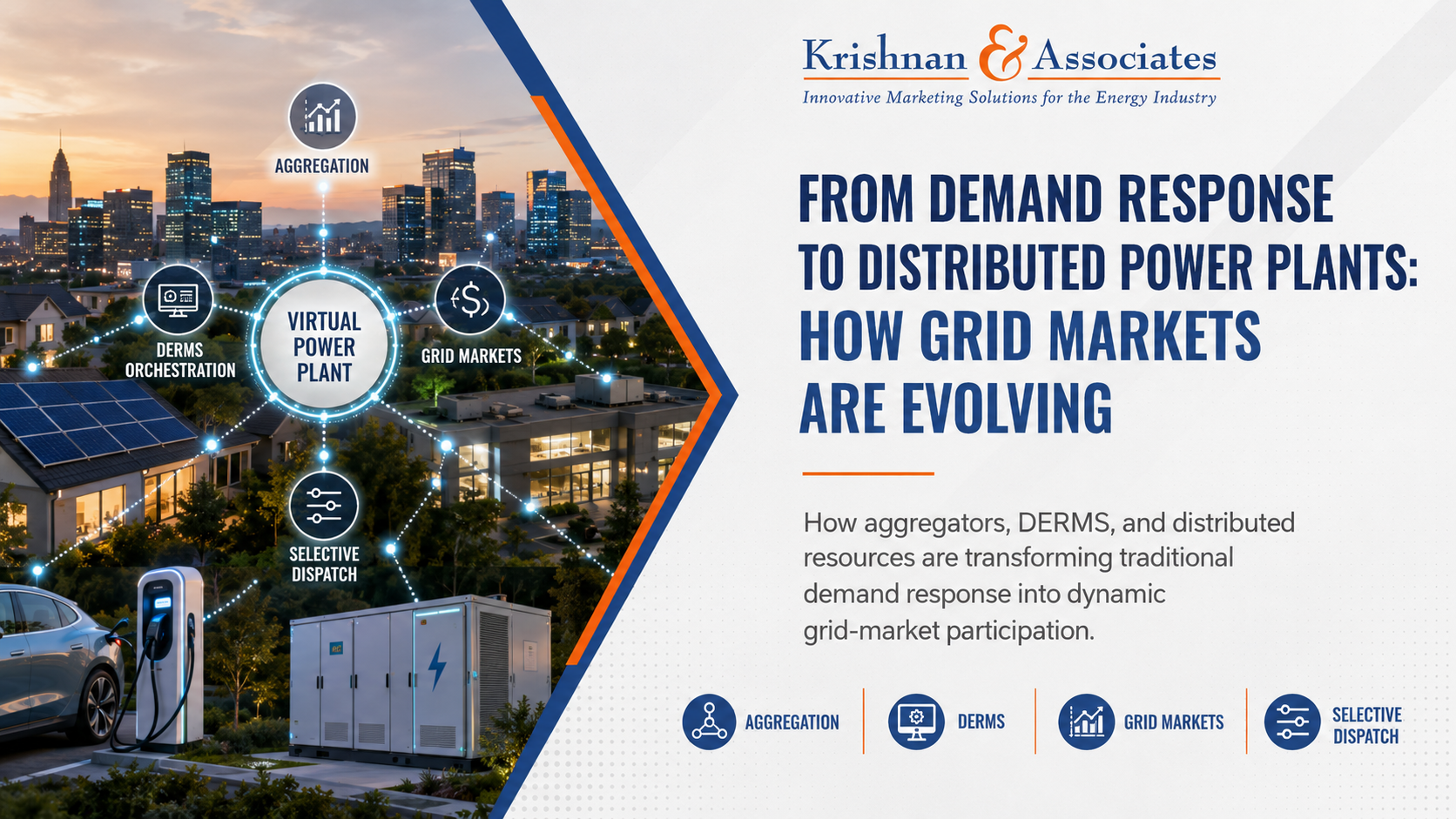
As distributed energy resources continue to grow, utilities and grid operators are rethinking how these assets can support a more flexible and resilient electric grid. This discussion explored how demand response programs are evolving beyond their traditional role, with batteries, electric vehicles, commercial buildings, and other distributed resources becoming active participants in electricity markets. The conversation also highlighted the technologies and market structures needed to coordinate these resources at scale as grid complexity continues to increase.
A recurring theme throughout the discussion was that the future grid will rely not only on adding more distributed resources, but also on managing them more intelligently. As participation expands, advanced orchestration platforms and virtual power plants are becoming increasingly important to maintaining reliability and maximizing the value of distributed assets.
The discussion highlighted several important trends shaping the future of distributed energy resources, including:
Key Takeaways
Demand response is evolving into full market participation. Distributed energy resources are moving beyond emergency demand response programs and increasingly participating in capacity, energy, and ancillary service markets.
Aggregators are becoming central to the DER ecosystem. Rather than utilities managing thousands of individual assets, aggregators enroll customers, combine distributed resources, and participate directly in wholesale electricity markets.
Participation thresholds are expanding the market. Programs now allow much smaller resources—including batteries, EV chargers, commercial buildings, and residential assets—to participate, greatly increasing available grid flexibility.
Grid orchestration is becoming more important than simple aggregation. Future DERMS platforms will focus on real-time visibility, forecasting, and selectively dispatching the most valuable resources based on system conditions.
Lessons from Australia are influencing U.S. markets. As North America experiences greater DER penetration, utilities are looking to mature international markets for proven operational strategies and DERMS deployments.
The future grid will rely on distributed resources operating collectively. Virtual power plants and intelligently coordinated DER portfolios are becoming essential tools for maintaining reliability and balancing supply and demand.