
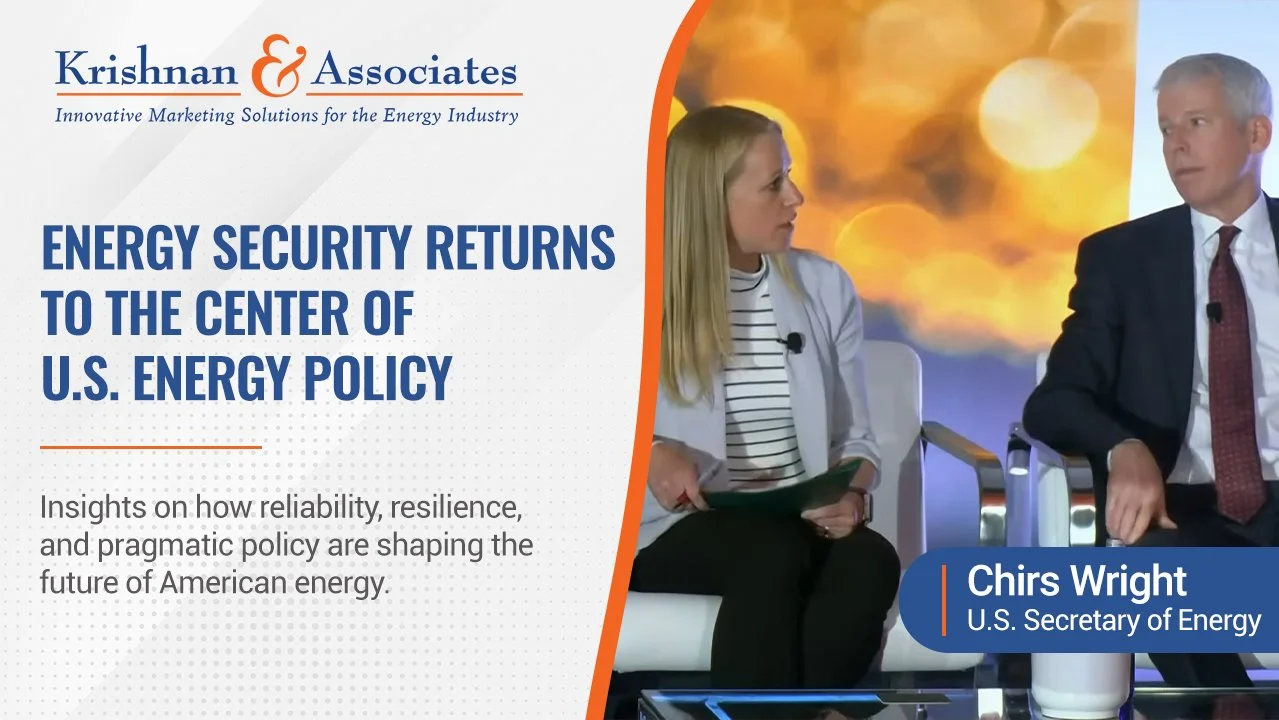
Krishnan & Associates was proud to serve as an energy industry media partner for the Reuters Global Energy Forum, where senior leaders from across the energy industry, government, finance, and technology sectors gathered to discuss the forces shaping the future of energy.
As part of our coverage of the event, the Krishnan & Associates team is sharing key observations from the Reuters interview with U.S. Energy Secretary Chris Wright.
The interview provided insight into the administration's current approach to energy policy and the priorities shaping the nation's energy future. The discussion focused on balancing rapidly growing electricity demand with the need to maintain reliability, affordability, and energy security, while also addressing the role of permitting reform, domestic energy production, and emerging technologies. As AI, data centers, and electrification continue to increase power demand, Secretary Wright emphasized the importance of building energy infrastructure quickly and maintaining a diverse mix of generation resources.
The conversation also examined the United States' position within the global energy landscape, highlighting the strategic role of natural gas, nuclear power, and international partnerships in supporting long-term economic growth. Together, these themes underscored the administration's focus on expanding energy supply while strengthening America's competitiveness and energy independence.
The discussion covered a broad range of policy and market issues. Some of the key takeaways identified by the Krishnan & Associates team are outlined below:
Key Takeaways
Energy security has returned to the center of U.S. energy policy. Secretary Wright emphasized that meeting growing electricity demand requires reliable, affordable, and secure energy rather than limiting available generation resources.
The administration is prioritizing permitting and regulatory reform. Faster approvals for power plants, transmission, LNG exports, pipelines, and nuclear facilities were identified as essential to supporting future energy demand.
Dispatchable generation remains critical. Wright argued that natural gas, nuclear, coal, and other firm resources will continue to play a central role in maintaining grid reliability as AI, data centers, and electrification drive electricity demand.
Data centers are viewed as an economic opportunity. Rather than increasing customer costs, properly structured data center growth can encourage investment in new generation, strengthen local economies, and improve overall grid utilization.
Hydrocarbons will remain an important part of the global energy mix. Oil and natural gas were described as essential for economic growth, industrial development, energy security, and U.S. geopolitical influence.
Global partnerships will shape future energy markets. Wright highlighted opportunities for increased energy cooperation with countries such as India while discussing broader energy relationships with Europe, China, and Venezuela.