
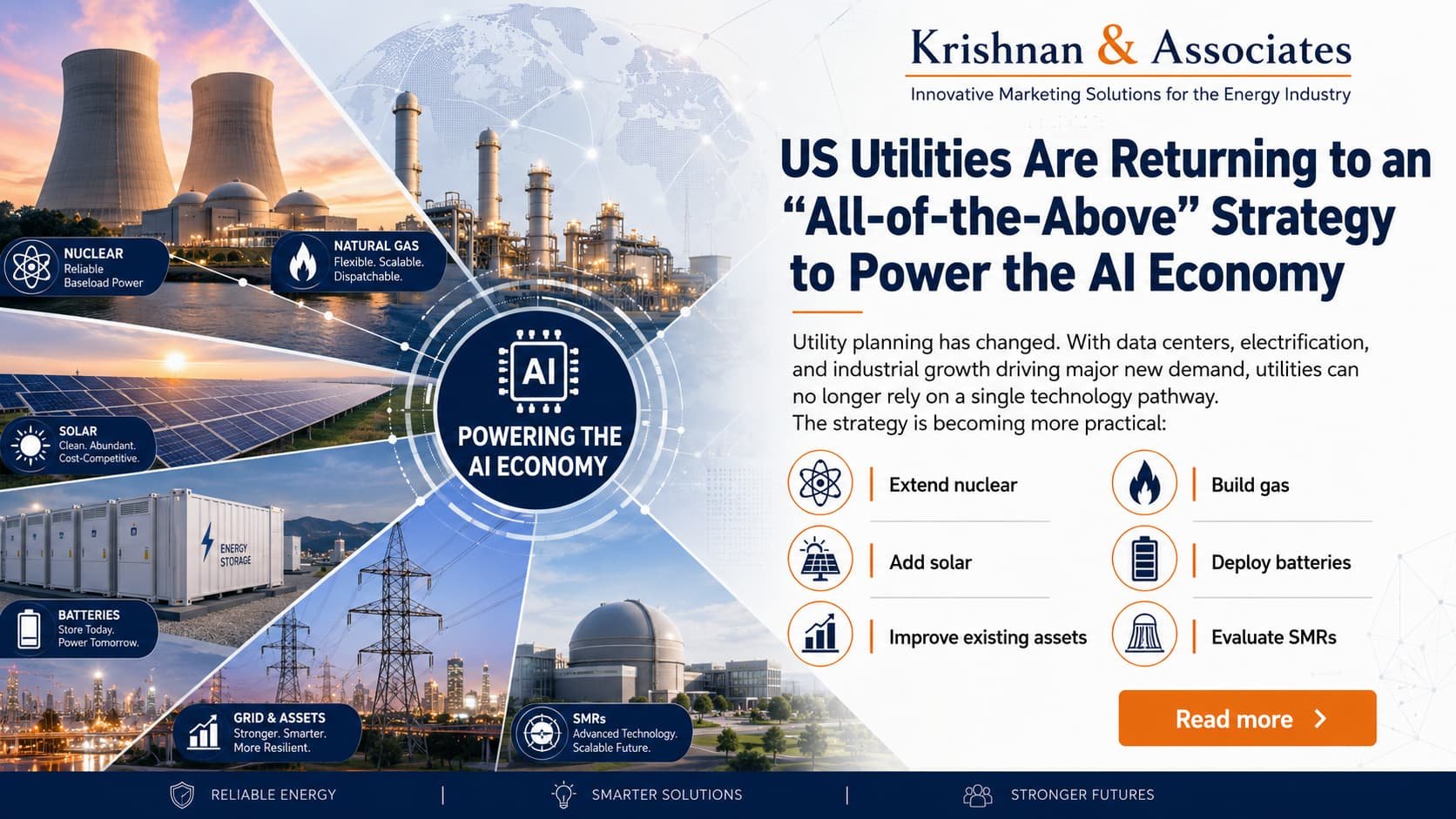
As electricity demand continues to rise at a pace few utilities anticipated just a few years ago, generation planning is entering a new phase. This discussion focused on how utilities are adapting to the rapid growth of AI, hyperscale data centers, and electrification by reevaluating the mix of resources needed to maintain a reliable grid. Rather than debating which technology will define the future, the conversation emphasized the importance of deploying every practical solution available to meet demand.
From extending the life of existing nuclear plants to building new natural gas capacity and evaluating emerging technologies like SMRs, the discussion reflected a pragmatic approach to resource planning. Speakers also highlighted the growing importance of financing, regulatory support, and execution as utilities prepare for one of the largest infrastructure buildouts in decades.
Some of the most notable takeaways from the discussion are summarized below:
Key Takeaways
Utilities are adopting an "all-of-the-above" generation strategy. Rather than relying on a single technology, utilities are simultaneously investing in natural gas, nuclear, solar, battery storage, and efficiency improvements to meet rapidly growing electricity demand.
Hyperscale data centers are reshaping generation planning. New AI and cloud projects from companies such as Google and Amazon are driving multi-gigawatt capacity additions, requiring utilities to build generation specifically for large-load customers.
Natural gas remains the fastest path to reliable capacity. Utilities continue to invest heavily in combined-cycle and simple-cycle gas plants because they provide proven, dispatchable power that can be deployed faster than many emerging technologies.
Existing nuclear plants have become strategic assets. License extensions to operate plants for up to 80 years are viewed as one of the most cost-effective ways to preserve reliable, carbon-free generation.
SMRs remain promising but unproven. Utilities are closely watching Small Modular Reactor development but remain cautious until commercial projects demonstrate reliable construction schedules, predictable costs, and operational success.
Financing and execution matter as much as technology. Regulatory tools such as Construction Work in Progress (CWIP), along with supply chain certainty and early equipment procurement, are critical to making large generation projects financially viable.
The industry's priority is adding dependable capacity quickly. Meeting AI-driven demand growth requires securing every available megawatt while balancing affordability, reliability, and long-term sustainability.