
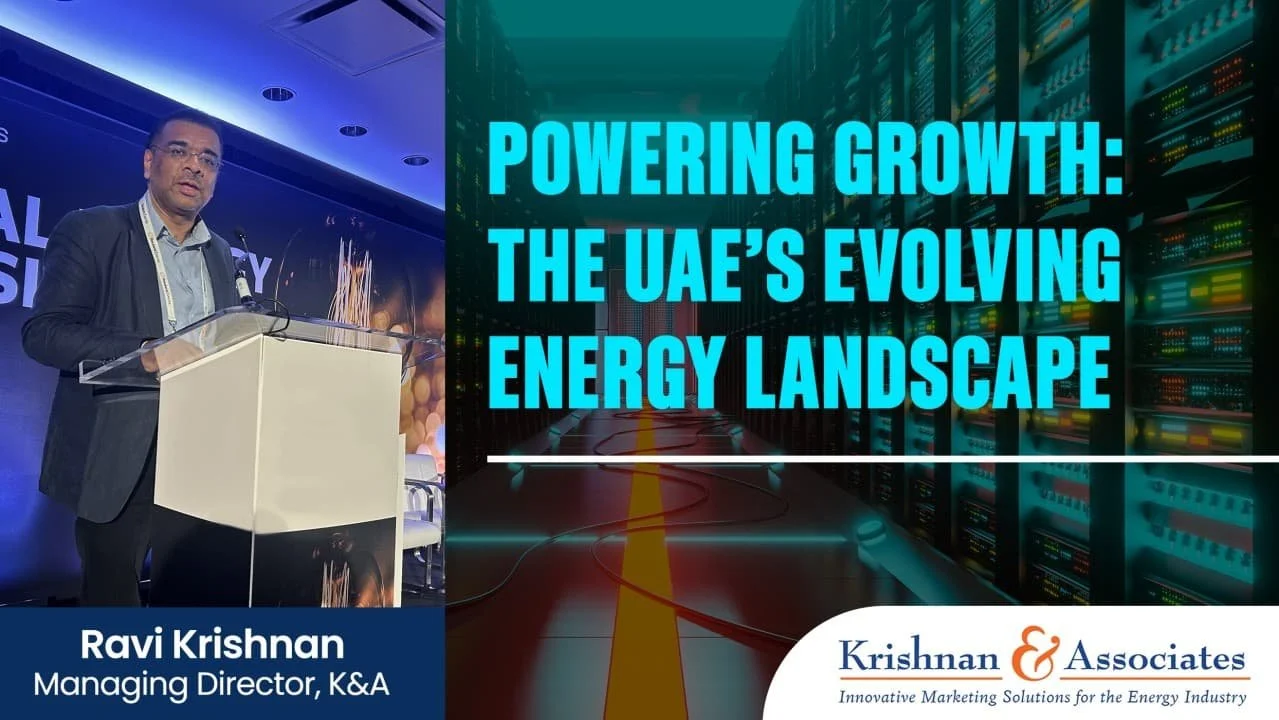
The United Arab Emirates (UAE) is undergoing a profound transformation in its power and energy sector. Behind the headlines about data centers, clean energy targets, and global climate summits lies a story of rapid demand growth, ambitious leadership goals, and an evolving mix of conventional and renewable energy.
Demand Growth Surging Ahead
For two decades, electricity demand in the UAE grew at an average of around 7% annually. That growth is now accelerating. With expanding population, industrial development, and the exponential rise of data centers, current demand appears to be moving into double-digit territory. Unlike mature economies, the UAE still behaves like an emerging market, where economic expansion directly translates into power demand.
The government’s aspiration to triple GDP by 2050 only intensifies this trajectory, ensuring that energy infrastructure will remain at the core of national priorities.
The Energy Mix: A Balancing Act
The UAE has set ambitious renewable targets and is increasingly integrating large-scale solar PV projects, often in gigawatt-sized blocks. Hybrid plants combining PV with grid-scale batteries are beginning to emerge as models for the future.
At the same time, the country is not abandoning conventional generation. The current system balances:
Daytime: Nuclear and solar to meet base and peak demand.
Nighttime: Nuclear complemented by gas-fired combined cycle plants, providing fast-ramping and reliable backup.
Preferential gas pricing has historically kept conventional generation competitive, but as costs of PV plus storage continue to decline, the economics are shifting.
Transmission & Infrastructure: Building at Speed
Unlike many markets where transmission expansion faces years of delays, the UAE has built a reputation for agility. Large transmission projects can be delivered in about five years—far faster than the decade-plus timelines common in parts of Europe.
Still, the rise of data centers is forcing an even faster pace. These projects demand grid connections in 18–36 months, requiring regulatory and permitting processes to accelerate further. Policy alignment at the leadership level has been critical in ensuring that these ambitious timelines can be met.
The Regional Dimension
The UAE’s energy story doesn’t end at its borders. With regional interconnectors, offshore grid projects, and partnerships on renewables and storage, the Gulf is becoming increasingly networked and collaborative. These developments reflect both economic necessity and political ambition to position the UAE as a hub for power trading, clean energy innovation, and digital infrastructure.
Looking Ahead
The UAE is navigating a delicate balancing act:
Meeting surging demand while reducing emissions.
Integrating renewables without compromising reliability.
Building infrastructure at unprecedented speed to support both economic growth and new digital industries.
As a result, the UAE is emerging not just as a fast-growing energy consumer, but as a testbed for large-scale, hybrid, and integrated energy systems. What happens here in the coming decade will offer valuable lessons for other markets grappling with similar challenges of demand growth, climate commitments, and technology integration.
Ravi Krishnan is the Founder of Krishnan & Associates, Inc., an energy-industry marketing, market analytics and business-development consulting firm. The company also operates a specialized global recruitment practice that has successfully placed more than 1,000 executives, C-suite leaders and technical professionals across the energy industry.
With decades of experience supporting utilities, power producers, engineering firms and energy technology companies, Ravi brings a practical perspective on how artificial intelligence, evolving skill requirements and changing compensation priorities are reshaping the global energy workforce.